Print on demand solves inventory and fulfillment. It does not solve product taste, customer trust, pricing, Etsy policy, or the day-to-day discipline of running a shop. Those are the parts that determine whether a wall art idea becomes a durable business.
Start with one recognizable buyer and one coherent collection. Order samples. Build print files for the ratios you truly support. Price from total order cost—not a target margin you saw in a video. Publish a small, polished catalog, then improve it using search, conversion, and customer evidence.
You do not need a perfect logo, fifty designs, or an elaborate software stack to begin. You need a product that follows Etsy’s rules, looks trustworthy in search, produces a good physical result, and leaves enough money after all costs to make the work worthwhile.
First, a useful reality check
The attraction of POD is real: a production partner can print, pack, and ship an item after the customer orders. You can test ideas without filling a garage with inventory. That is a meaningful advantage.
The tradeoff is that the barrier to entry is low for everyone else too. Generic design, generic mockup, generic title, and generic supplier are easy to reproduce. Your defensible work happens in the choices around them:
- a point of view that makes the collection recognizable;
- original artwork and a clear relationship to the buyer;
- well-prepared files and carefully selected products;
- mockups that communicate scale and style honestly;
- reliable service when fulfillment does not go as planned;
- a production process you can repeat without careless errors.
A healthy expectation: your first listings are research as much as inventory. Their job is to reveal which subject, room, size, price, and presentation earn attention. Treat early results as evidence—not a verdict on your talent.
Choose the business model before the products
“Wall art on Etsy” can describe several businesses with different customers and economics. Choose deliberately because the files, listing images, customer questions, and fulfillment work will all change.
| Model | Buyer receives | Main advantage | Main challenge |
|---|---|---|---|
| Digital download | Printable files | No physical fulfillment; strong gross margin | Heavy competition, file support, lower typical order value |
| Unframed POD print | Printed poster or art print | Simple physical offer and lower shipping weight | Paper and color quality must be communicated clearly |
| Framed POD print | Ready-to-hang or framed piece | Higher perceived convenience and order value | Higher production and shipping cost; damage risk |
| Mixed catalog | Digital and/or physical choices | Serves multiple buyer preferences | Easy to create confusing listings and support expectations |
New sellers often want every product type immediately. A narrower first offer is easier to photograph, price, explain, and support. You can add framed versions or digital companions after the first product system is reliable.
Choose one initial production promise
For example: “museum-inspired botanical prints, unframed, in three portrait sizes” is operationally clearer than “all kinds of wall art in every possible format.” The narrow promise tells you which supplier samples to order, which ratios to prepare, and which buyer questions the listing must answer.
Build an offer for a person, not a trend label
“Boho wall art” and “minimalist print” describe aesthetics, but they do not yet describe a buyer. Add subject, space, occasion, or identity until the product has a reason to exist.
Subject + room
Quiet botanical studies for a neutral bedroom or reading corner.
Person + occasion
A personalized location print for a couple’s first-home anniversary.
Style + architecture
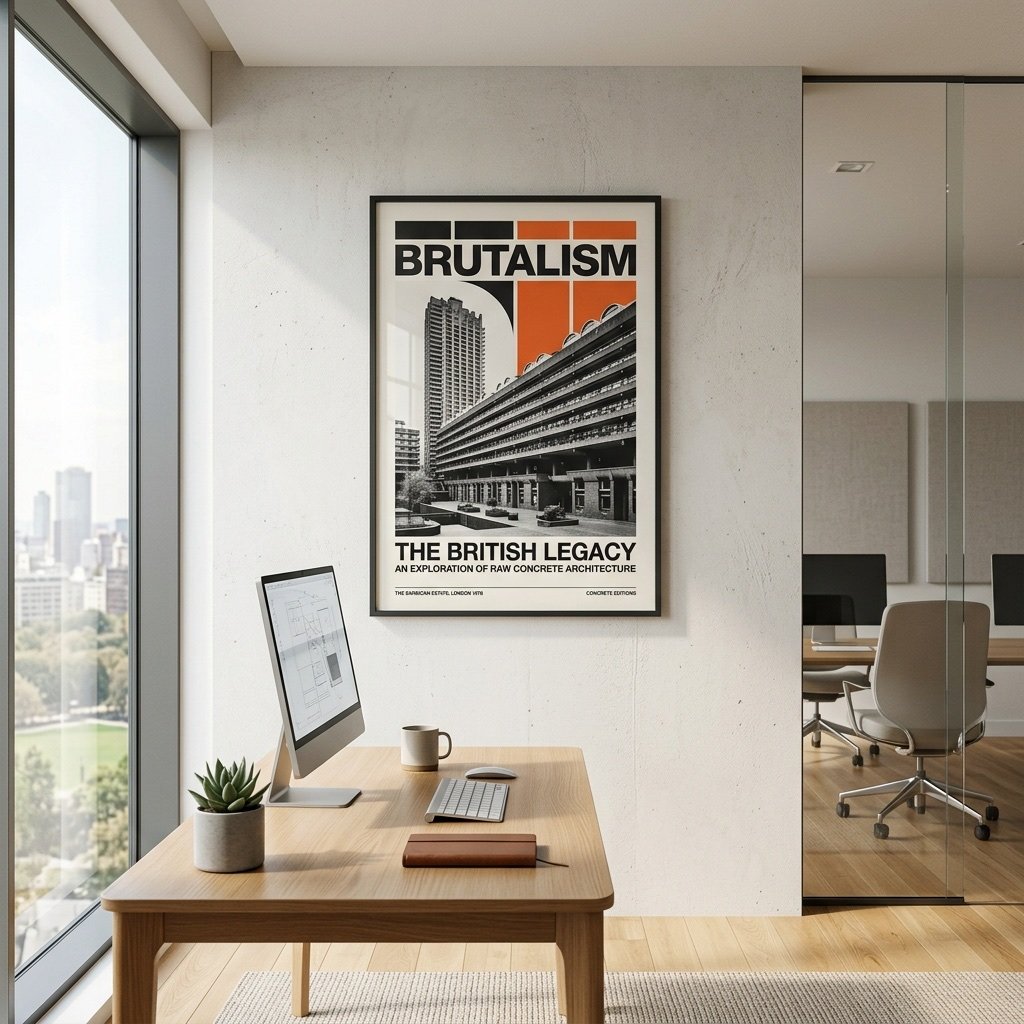
Brutalist city studies for design-conscious offices and studios.
Collection + problem
A coordinated three-print set that makes an empty dining wall easy to finish.
Validate the problem, not just the keyword
Search demand is useful, but buyer behavior gives the phrase meaning. Study current Etsy results and reviews. Note common sizes, price ranges, room contexts, personalization options, delivery complaints, and questions. You are looking for a useful opening: a subject that feels underserved, a presentation that is clearer, or a product choice that removes friction.
Do not copy a bestseller’s design or listing. The point of research is to understand expectations and gaps. Your collection still needs original creative work and its own point of view.
Design a small collection, not one lonely listing
Five to twelve related products give a buyer enough choice to understand the shop. Use a shared palette, subject system, or visual language. A collection also produces better merchandising: pairs, triptychs, room sets, and internal recommendations.
Understand Etsy’s rules before building inventory
Print on demand is allowed when the product is based on the seller’s original design or a buyer’s customization and the production relationship is disclosed accurately. It is not permission to resell a commercially available product you did not design.
Read Etsy’s current Creativity Standards and its guidance on working with production partners. Policies can change, so treat Etsy’s own documentation as the authority rather than an old tutorial.
- Sell work you are entitled to use commercially.
- Disclose the production partner on relevant listings.
- Describe accurately where the item ships from.
- If AI was used, follow Etsy’s current disclosure requirements.
- Do not imply that a digital mockup is a photograph of a sample.
- Keep records for licenses, source files, and production decisions.
“Inspired by” does not remove intellectual-property risk. Celebrity names, sports teams, characters, brand logos, song lyrics, and recognizable franchises can create trademark or copyright problems even when the artwork was redrawn.
Turn the design into a trustworthy product
This is where many attractive ideas fail. The product must work at the promised size, map to the correct supplier variant, and look consistent with the listing that sold it.
Select the supplier and product
Compare print method, paper, frame construction, available sizes, fulfillment locations, packaging, reprint policy, shipping cost, and branding options. A large catalog is less important than consistent output for the few products you intend to sell.
Order samples before launch
Use difficult artwork: dark gradients, saturated color, fine line work, and subtle neutrals. Inspect sharpness, color shift, paper feel, trimming, frame corners, packaging, and transit damage. Photograph the sample for detail images.
Prepare the right ratio files
Build only the ratios your chosen variants require. The printable wall art size guide explains 2:3, 3:4, 4:5, 11:14, and ISO dimensions in detail.
Review every crop
A centered crop is efficient but not automatically correct. Protect faces, text, signatures, and borders. Use the multi-ratio workflow to decide when to crop, add margins, or recompose.
Create a complete image sequence
Use the hero mockup to earn attention, then add clean art, alternate context, scale, physical detail, what-is-included information, and production notes. See the mockup conversion guide for a practical sequence.
Map and approve the product
Connect each supplier size to the correct file, create the Etsy draft, and compare the visible options against the production mapping before publishing.
Build for the largest size you promise
Pixels determine the available detail. A 24×36-inch 2:3 print at 300 PPI needs 7,200×10,800 pixels. Changing a smaller image’s metadata to “300 DPI” does not make it suitable for a large print. If a source cannot support the largest variant, offer a smaller product or create a genuinely higher-resolution source.
Color is a product decision
Calibrate expectations with samples. Screens emit light; paper reflects it. Deep shadows may close up, bright colors may soften, and different papers change contrast. Use the color space your production partner requests, avoid silently converting files several times, and make listing images resemble the physical sample rather than an idealized monitor preview.
Price for real costs, not optimistic margin
Revenue is not profit, and supplier base price is not total cost. Build a per-order model before choosing the public price.
Selling price + charged shipping − production − supplier shipping − marketplace fees − payment processing − expected ads − expected replacements = contribution before overhead and tax
Etsy’s fee structure includes listing, transaction, payment-processing, and potentially other location- or program-specific costs. Check the current Etsy fees and taxes documentation and calculate using your own country and enrollment status.
| Cost group | Include | Common oversight |
|---|---|---|
| Production | Print, frame, size upgrades | Using only the cheapest variant in the model |
| Delivery | Supplier shipping, remote regions, replacement shipping | Calling shipping “free” without adding it to price |
| Marketplace | Listing, transaction, payment processing, applicable programs | Applying one percentage to every fee |
| Acquisition | Ads, discounts, affiliate or promotional cost | Assuming every sale will be organic |
| Quality risk | Reprints, refunds, damage, support time | Modeling a perfect fulfillment rate |
| Overhead | Software, samples, accounting, design time | Treating personal time as free forever |
Run the model for each important size. A small poster and a large framed piece do not share the same economics. If one variant has an unhealthy contribution, increase its price or remove it instead of hoping volume will repair every loss.
Create a listing that answers the buyer’s next question
Etsy SEO begins with relevance, but the listing still has to earn a click and convert. Write for the buyer who has a wall, a style, a room, a budget, and a concern about what will arrive.
Use a specific, readable title
Put the clearest product phrase early, then add meaningful attributes. A title such as “Brutalist Architecture Wall Art Print, Neutral Office Poster” communicates more than a string of repeated synonyms. Avoid promising materials, framing, or delivery options the listing does not include.
Choose tags from real language
Combine subject, style, room, recipient, occasion, and product type where they genuinely apply. Do not use an unrelated trending phrase to attract the wrong visitor. A qualified click is more useful than a visit that immediately returns to search.
Write the opening for a skimmer
The first lines should explain what the item is, whether it is physical or digital, what is included, and the central aesthetic. Follow with sizes, materials, production, framing, shipping, and care information in scannable sections.
Make the image sequence do real work
Show scale, label the displayed size, clarify whether the frame is included, and include sample details when possible. Mockups should help the customer imagine the product while information slides remove uncertainty.

Launch small enough to learn
A launch is not a single announcement. It is the beginning of a feedback loop. Publish a coherent group of products, make the shop trustworthy, then observe what buyers do.
Before publishing
- Complete the shop banner, About section, production partner, and policies.
- Verify every listing on mobile and desktop.
- Place a test order or walk through the buyer journey where possible.
- Prepare support replies for size, framing, shipping, and damage questions.
- Keep the approved production files and listing assets organized by product ID.
The first 30 days
| Period | Focus | Useful action |
|---|---|---|
| Days 1–7 | Technical confidence | Fix confusing options, image crops, shipping details, and listing errors. |
| Days 8–14 | Search relevance | Review which queries and products receive impressions; improve weak titles without rewriting everything daily. |
| Days 15–21 | Click appeal | Improve the hero mockup for listings that appear but earn little attention. |
| Days 22–30 | Offer quality | Study favorites, carts, questions, and sales; expand the strongest collection rather than adding unrelated products. |
Read the funnel in order
Low impressions suggest a relevance, demand, or shop-discovery problem. Impressions without clicks point toward the hero image, title, price, or product fit. Clicks without orders point toward the offer, mockups, trust, shipping, options, or price. Diagnose the stage before changing the entire business.
Operate the shop without creating chaos
The first order is exciting. The tenth exposes the workflow. Build a lightweight operating system before volume makes every mistake more expensive.
Keep product preparation visible
Use clear states such as master approved, ratios pending, print files approved, mockups pending, draft ready, and published. The complete POD staging workflow explains how to move a product through those gates.
Own the customer relationship
The production partner prints the order, but the customer bought from your shop. When a package is late, damaged, or misprinted, respond promptly, explain the next step, and solve the buyer’s problem while handling the supplier claim separately.
Review the catalog, not just new products
Supplier costs, available variants, policies, mockup styles, and Etsy features change. Schedule a periodic review of pricing, shipping promises, file mappings, and top listings. Update pages when the product truly changes; do not change dates simply to make old information appear new.
Scale the winning system
Growth should make the shop more coherent. When one collection works, extend it with complementary subjects, orientations, sets, or sizes. Reuse the production checklist and visual system—not the exact same design with superficial changes.
Frequently asked questions
Is print on demand allowed on Etsy?
Yes, when the item is based on your original design or a buyer’s customization and the production partner is disclosed accurately. Always review Etsy’s current Creativity Standards and production-partner rules.
How many designs should I launch with?
There is no required number. A coherent group of roughly five to twelve polished products is enough to communicate a point of view and begin learning without multiplying unfinished work.
Should I sell framed and unframed prints in one listing?
Only if the options remain easy to understand and the economics work for every variant. Separate listings can produce clearer search results and image sequences when the buyer expectations differ substantially.
Do I need 300 DPI files?
You need enough real pixels for the intended physical size. 300 PPI is a common high-quality target, but the production partner’s requirements and viewing distance matter. Changing metadata alone does not improve a small source.
Can I start without paid ads?
Yes. A small catalog can first validate relevance, hero images, and conversion organically. Ads amplify the listing you already have; they do not repair an unclear offer or unprofitable price.
What should I automate first?
Automate repetitive preparation after the manual version is reliable: ratio setup, naming, folder structure, mockup placement, and draft creation. Keep creative crop review, product selection, pricing, and publication under human control.
Spend less time between the final design and the Etsy draft
Synclisto helps wall art sellers prepare ratios, organize production assets, create mockups, map Printful products, and review an Etsy draft before publishing.
Start staging products